
Meal prep indian is quickly becoming a kitchen revolution for busy families and professionals in 2026. With more people juggling work, family, and wellness, planning and preparing Indian meals ahead of time is both a challenge and an opportunity.
Have you ever felt overwhelmed by the idea of cooking diverse Indian dishes every day? You are not alone. Many home cooks struggle to balance variety, taste, and nutrition with limited time.
A structured meal prep indian guide can be your secret weapon. By following proven strategies and using modern tools, you can save time, reduce stress, and enjoy healthier meals throughout the week.
Get ready to discover step-by-step meal prep indian strategies, smart ingredient selection, sample plans, clever storage tips, and easy ways to customize for any dietary need.
Understanding Indian Meal Prep: Fundamentals and Benefits
Meal prep Indian style is transforming kitchens across the country, making it easier for families to enjoy delicious home-cooked meals without daily hassle. At its core, meal prep Indian means preparing ingredients or cooking dishes in advance, so you can quickly assemble meals throughout the week. Unlike Western meal prepping, which often focuses on salads or grain bowls, meal prep Indian can include curries, sabzis, and even homemade roti dough. There are two main approaches: partial prep, like chopping veggies or marinating proteins, and full prep, where entire dishes are cooked and stored. Some people prefer prepping once a week, while others do smaller daily sessions to keep things fresh.

Defining Indian Meal Prep
Meal prep Indian is unique because it balances traditional flavors with the need for convenience. It often involves:
- Batch-cooking gravies, dals, or sabzis to use in multiple meals.
- Prepping base ingredients like ginger-garlic paste or chopped onions.
- Assembling meal components, so meals can be put together in minutes.
The flexibility of meal prep Indian allows you to choose between prepping everything for the week ahead or just making sure your fridge is stocked with ready-to-cook basics. This approach is perfect for busy households that crave variety and freshness.
Benefits of Indian Meal Prep
The benefits of meal prep Indian are impressive. According to competitor content, prepping meals can cut daily cooking time by up to 50 percent, freeing up precious hours during hectic weekdays. When you plan ahead, you also buy only what you need, which reduces both food waste and grocery expenses. Meal prep Indian helps you:
- Ensure balanced nutrition with controlled portions.
- Support dietary goals, whether you’re managing weight, diabetes, or following a vegetarian or vegan lifestyle.
- Reduce mealtime stress and promote family bonding.
If you want expert tips for quick and healthy Indian cooking, check out this Nutritionist’s Indian Meal Prep Hack for practical ideas you can use right away.
Common Myths and Misconceptions
Despite its growing popularity, some people believe meal prep Indian won’t work because Indian food must be freshly cooked. In reality, many gravies, dals, and sabzis taste even better after a day or two as flavors meld. Another myth is that meal prep Indian is only for singles or working professionals. In truth, families of all sizes can benefit, as prepping in advance means everyone eats healthier with less stress. Meal prep Indian can be customized for any lifestyle, from solo living to large family gatherings.
Real-Life Example
Imagine a working mom juggling career and home life. On Sunday, she spends a couple of hours making bhuna masala, boiling dal, and chopping veggies. Throughout the week, she quickly assembles meals by mixing and matching these prepped components. With meal prep Indian, her family enjoys homemade dishes every day, and she avoids the evening rush. This simple routine brings more calm to her home and ensures everyone eats well.
Essential Tools and Ingredients for Indian Meal Prep Success
Getting started with meal prep indian is easier when your kitchen is stocked with the right tools and ingredients. Imagine opening your fridge to find everything organized, fresh, and ready for quick assembly. Let’s break down exactly what you need to set yourself up for meal prep indian success.
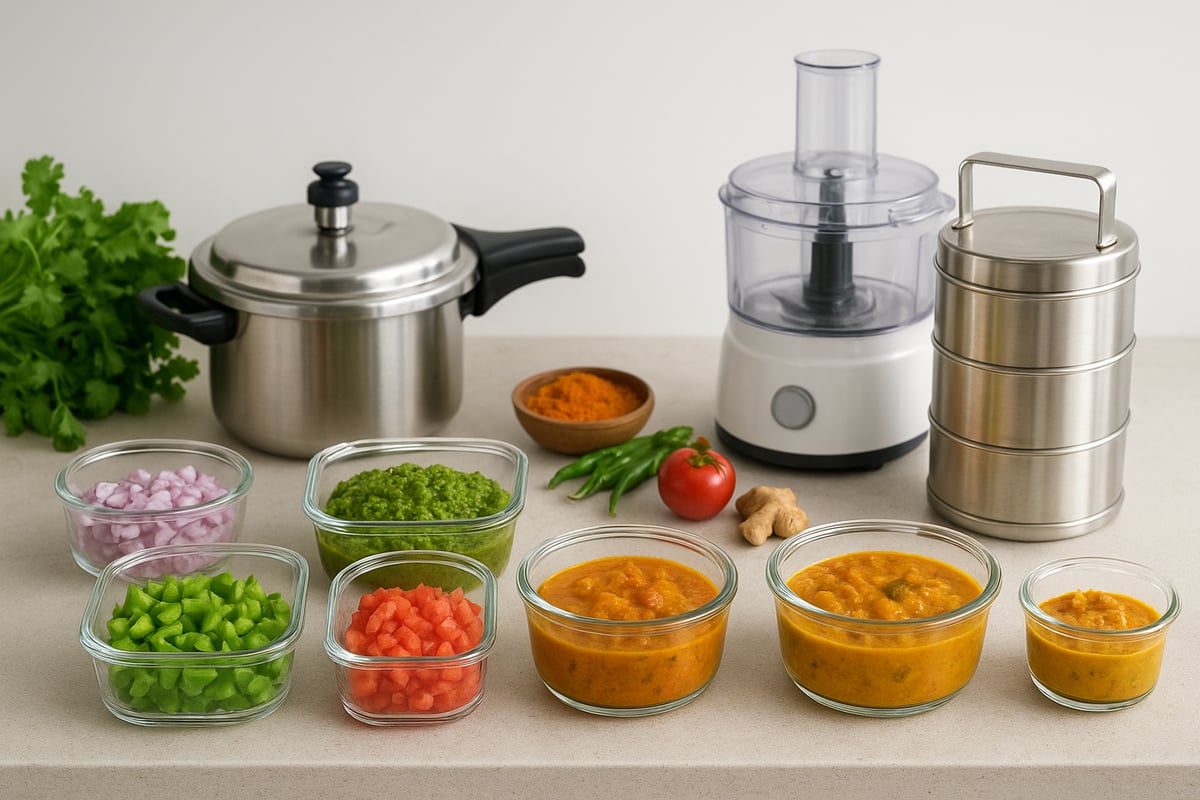
Must-Have Kitchen Tools
The right equipment can make meal prep indian smooth and enjoyable. Start with airtight glass containers—they keep flavors locked in and are safer for reheating. Compartmentalized tiffin boxes are fantastic for packing lunches that stay fresh and separated. Zip-lock bags are perfect for freezing chopped veggies or homemade masala pastes.
A pressure cooker or Instant Pot is a must for bulk-cooking dals, beans, and rice in record time. Add a grater, chopper, and food processor for lightning-fast prep. Curious about maximizing efficiency? Check out these essential kitchen tools and tips to streamline your meal prep indian routine and save precious time.
Pantry Staples and Fresh Ingredients
A well-stocked pantry is the backbone of meal prep indian. Core spices like cumin, coriander, turmeric, garam masala, and chili powder are non-negotiable for authentic flavor. Ready-to-use pastes—ginger-garlic, bhuna masala, makhani base—cut down on weekday cooking.
Don’t forget grains such as rice, quinoa, millets, and whole wheat flour. Stock up on lentils and legumes: chana, rajma, moong, and toor dal are all meal prep indian favorites. Fresh produce like onions, tomatoes, potatoes, and seasonal veggies keep meals vibrant. For protein, paneer, yogurt, eggs, and chicken (if you’re non-veg) round out your prep.
Storage and Organization Tips
Smart storage is essential for meal prep indian to stay fresh and safe. Always label containers with the date and meal type, so nothing gets forgotten in the fridge. Store gravies and curries in small, single-meal portions to make reheating fast and easy.
Use freezer-safe containers for long-term storage—gravies can last up to four weeks this way. Keep salad and fruit boxes separate from cooked dishes to maintain texture and freshness. A tidy fridge and pantry make it easy to see what’s prepped and what needs restocking, making meal prep indian a breeze.
Example
Here’s what a typical week of meal prep indian might look like:
| Item | Prep Action | Storage Type |
|---|---|---|
| Bhuna Masala | Cooked in bulk | Freezer-safe jars |
| Boiled Dal | Batch boiled | Airtight container |
| Chopped Veggies | Washed and diced | Zip-lock bags |
| Chapati Dough | Kneaded and portioned | Airtight container |
| Fruit Boxes | Sliced and mixed | Compartmentalized box |
With these basics prepped, assembling meals each day is quick and satisfying. Meal prep indian isn’t just about saving time, it’s about setting yourself up for stress-free, delicious eating all week.
Step-by-Step Indian Meal Prep Planning for 2026
Ready to transform your kitchen routine with a modern meal prep indian approach? Let’s break it down into actionable steps that make the process simple, efficient, and enjoyable for any household.
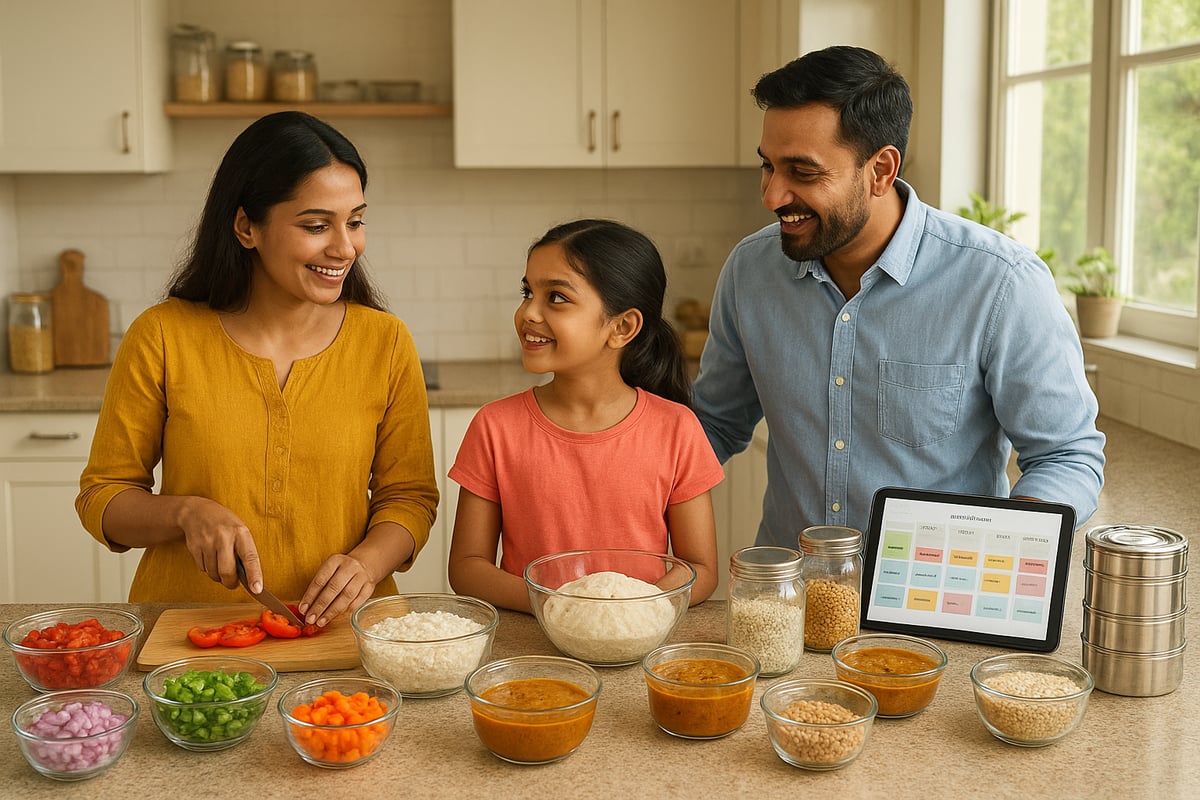
Step 1: Setting Goals and Creating a Meal Plan
Begin your meal prep indian journey by understanding your family’s preferences, dietary needs, and weekly schedule. Is your household mostly vegetarian, or do you include non-veg options? Do you have kids who need lunchboxes, or adults with specific health goals?
Use digital planners or meal prep apps to organize your week. These tools help you visualize meals and ensure variety. For example, plan a week with North Indian dal-chawal, South Indian idli-sambar, and fusion dishes. Balance grains, proteins, and veggies to keep everyone satisfied.
A sample meal plan table might look like this:
| Day | Breakfast | Lunch | Dinner |
|---|---|---|---|
| Monday | Poha | Dal-Chawal | Paneer Curry |
| Tuesday | Idli | Rajma Rice | Veg Sabzi |
| Wednesday | Cheela | Kadhi-Khichdi | Chicken Masala |
| … | … | … | … |
If you have specific health goals or need to manage macros, explore Sample macronutrient meal plans for inspiration and structure.
Step 2: Smart Grocery Shopping
Smart shopping is the backbone of successful meal prep indian routines. Start by listing out the core categories: spices, fresh produce, proteins, and grains. Categorize your shopping list to speed up your trip and avoid forgotten items.
Shop for bulk items and shelf-stable essentials like rice, dal, and spices during monthly runs. Reserve fresh produce and dairy for weekly shopping to maintain quality. Prioritize seasonal veggies for flavor, nutrition, and cost savings.
A few shopping tips:
- Always check your pantry before heading out.
- Look for sales on bulk grains and pulses.
- Invest in quality containers for storage.
Choosing the right ingredients now saves time, money, and stress later in the week.
Step 3: Prepping Ingredients
Dedicate a few hours on the weekend to prep your ingredients for the week ahead. This is where the meal prep indian process comes to life. Start by washing, peeling, and chopping all your vegetables. Store them in airtight, labeled containers for easy access.
Prepare and freeze base gravies like bhuna masala or makhani. Boil lentils, chickpeas, and eggs in advance for quick curries or salads. Make chapati or paratha dough and store it in an airtight container. Portion out grains such as rice or quinoa for faster cooking.
Here’s a quick checklist:
- Chop onions, tomatoes, and seasonal veggies.
- Boil dal, rajma, or chana.
- Make and freeze ginger-garlic paste.
- Store fruit in snack-sized boxes for grabs.
These steps cut down daily prep time and keep your kitchen organized.
Step 4: Cooking and Assembling Meals
With your ingredients ready, it’s time to batch-cook and assemble. For meal prep indian success, cook curries, sabzis, and proteins to about 75 percent doneness. This keeps them fresh and ready for a quick finish before serving.
Prepare breakfast batters like dosa or cheela ahead of time. Cook and freeze parathas, kebabs, or patties for easy reheating. Assemble meal boxes for breakfast, lunch, and dinner as per your plan.
Try multitasking: simmer a dal while roasting veggies and prepping a salad. Use compartmentalized tiffin boxes to portion out meals for the week. This not only saves time but also helps with portion control and reduces food waste.
Step 5: Storing and Labeling
Proper storage is crucial for safe and tasty meals. Use airtight, BPA-free containers and zip-lock bags for gravies, chopped veggies, and cooked beans. Store meal components in the fridge for up to four days, or freeze them for up to four weeks.
Label each container with the prep date and meal type. This simple habit keeps your fridge organized and ensures you rotate meals for maximum freshness. Store salads, raita, and fruits separately to prevent sogginess.
A typical Sunday meal prep indian session might look like this: prepare gravies, boil dal, chop veggies, and assemble a few meal boxes. In just 2–3 hours, you’ll set yourself up for a stress-free, healthy week ahead.
Sample Indian Meal Prep Plans and Recipes
Ready to take your meal prep indian game to the next level? A well-structured plan with make-ahead recipes and smart customization can make all the difference for busy weeks. Let's dive into practical strategies, step-by-step examples, and real plans you can use right away.
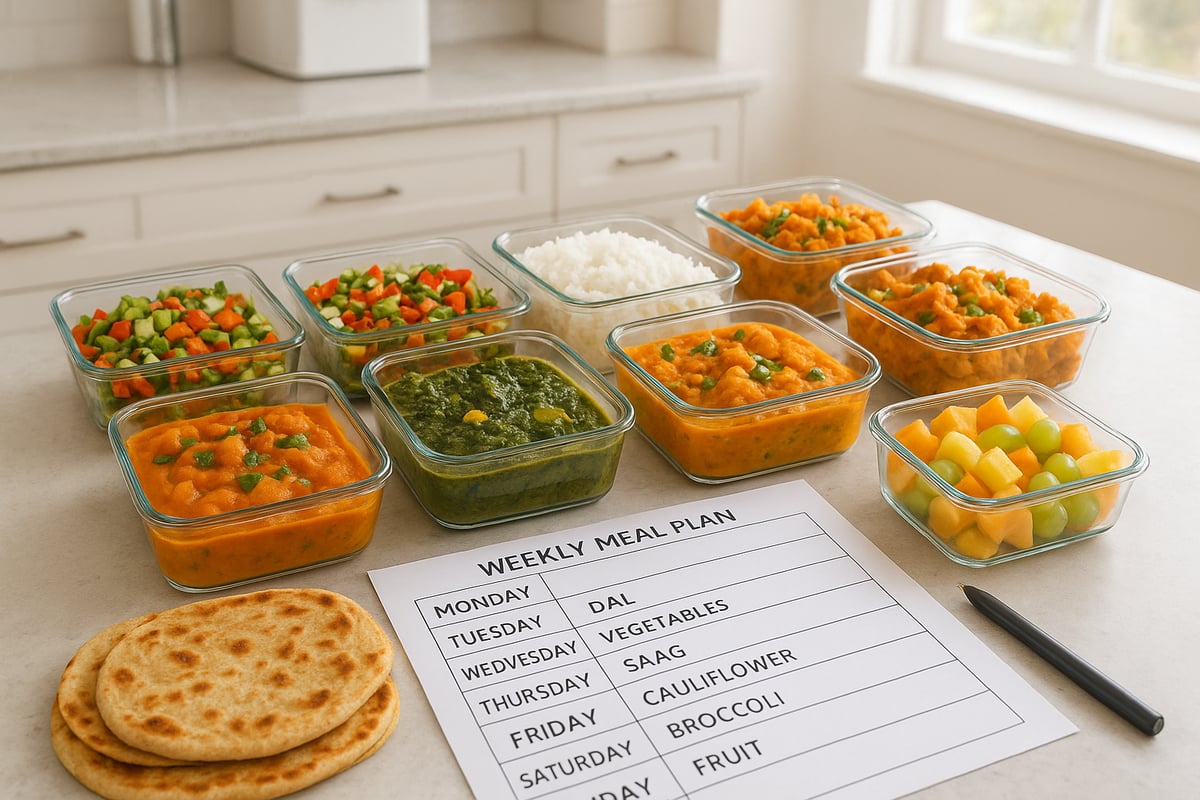
Weekly Meal Prep Plan Example
A successful meal prep indian routine starts with a diverse, balanced weekly plan. Here’s a sample 7-day schedule to inspire your own:
| Day | Breakfast | Lunch | Dinner |
|---|---|---|---|
| Monday | Idli + Chutney | Dal-Chawal | Paneer Curry |
| Tuesday | Poha | Rajma Rice | Chicken Masala |
| Wednesday | Overnight Oats | Kadhi-Khichdi | Mixed Veg Sabzi |
| Thursday | Stuffed Paratha | Sabzi-Roti | Salad Bowl |
| Friday | Upma | Biryani | Grilled Fish/Tofu |
| Saturday | Cheela | Chole-Rice | Veg Stir-Fry |
| Sunday | Dosa | Pulao + Raita | Lentil Soup |
With this meal prep indian plan, you can mix and match dishes for variety while ensuring every meal is nutritious and satisfying.
Make-Ahead Recipes
The magic of meal prep indian lies in prepping versatile bases and components ahead of time. Here are some essentials:
- Bhuna masala: A rich onion-tomato base for most curries. Make in bulk, store in glass containers for up to 4 weeks.
- Makhani gravy: Perfect for butter chicken or paneer, freeze in portions.
- Boiled dals/chickpeas: Ready for quick curries or salads.
- Chutneys and raita: Prep cucumber, mint, or tomato chutneys, and keep raita in a separate container for freshness.
For balanced nutrition, consider adding more protein to your meal prep indian strategy. Explore this Protein-packed mighty meals guide for extra inspiration and tips on incorporating high-protein options.
Customizing for Dietary Needs
Meal prep indian is highly adaptable. Adjust your weekly plan to fit your unique goals:
- Gluten-free: Focus on rice, millets, and naturally gluten-free dishes like poha or dosa.
- Low-carb: Swap grains for cauliflower rice, add more stir-fried veggies and grilled proteins.
- Vegetarian/vegan: Center meals around tofu, legumes, and dairy-free gravies. Use coconut milk or cashew cream as alternatives.
By customizing meal prep indian, you can easily accommodate allergies, preferences, or health targets for the whole family.
Example
Let’s walk through a practical meal prep indian scenario. On Sunday, prep a big batch of bhuna masala, boil dal and chickpeas, chop a variety of veggies, and knead chapati dough. Cook parathas and freeze them in stacks. Pack fruit boxes for snacks.
For lunchboxes, assemble spiced chicken meal prep bowls: layer brown rice, roasted veggies, and juicy chicken pieces. Store raita and salad separately for freshness. Switch up the veggies each day so your meal prep indian never gets boring.
The best part? These meals taste great both hot and cold, offering true flexibility for breakfast, lunch, or dinner in 2026.
Storage, Safety, and Reheating Best Practices
Storing your meal prep indian creations safely is the secret ingredient to enjoying delicious, healthy food all week. Whether you’re prepping for one or a whole family, following best practices keeps your meals fresh, nutritious, and ready to serve. Let’s break down exactly how to store, reheat, and maintain the quality of your favorite Indian dishes.
Safe Storage Guidelines
When it comes to meal prep indian, safe storage is non negotiable. Always transfer cooked food into airtight containers within two hours. This helps lock in freshness and keeps bacteria at bay.
- Refrigerate meal components you’ll eat within four days.
- Freeze gravies, dals, and cooked proteins for up to four weeks.
- Separate raw and cooked items to prevent cross contamination.
- Label every container with the date and meal type for easy rotation.
The rapid rise in ready to cook options highlights why safe storage is crucial. According to Indian Ready-to-Cook Meals Market Analysis, more Indian families are choosing convenience, making food safety knowledge a must for meal prep indian success.
Reheating Tips
Reheating your meal prep indian dishes properly ensures every bite is just as delicious as day one. Always aim for thorough, even heating.
- Use a microwave or stovetop for curries and gravies, heating until piping hot.
- For parathas and kebabs, reheat on a skillet for crispiness and flavor.
- Stir halfway through reheating to avoid cold spots.
- Never reheat food more than once to maintain safety and taste.
Taking these reheating steps helps preserve the original textures and aromas of your meal prep indian favorites.
Maintaining Freshness and Nutrition
Keeping your meal prep indian vibrant and nourishing is all about smart storage and finishing touches.
- Store salads, raita, and chutneys in separate containers to avoid sogginess.
- Add fresh herbs, lemon juice, or crunchy toppings just before serving.
- Rotate your meals every few days to keep things interesting and balanced.
- Keep your fridge clean and organized for maximum shelf life.
These habits ensure your meal prep indian stays tasty and supports your health goals all week.
Example
Let’s put it all together with a real world example. After prepping chapatis, parathas, and gravies, let them cool completely before storing. Stack chapatis between parchment in airtight boxes and freeze. To thaw, leave them in the fridge overnight, then reheat on a hot tawa for soft, fluffy results.
Gravies and dals can be portioned, labeled, and frozen. When ready to eat, defrost in the fridge, then heat until bubbling. By following these steps, your meal prep indian will taste fresh and safe every time.
Customizing Indian Meal Prep for Your Lifestyle
Creating a meal prep indian routine that fits your unique lifestyle is easier than you think. Whether you’re cooking for one, a couple, or a large family, customization is key. By adapting your approach, using smart tools, and mixing tradition with modern ideas, you can make meal prep indian work for everyone in your home.
Adapting for Family Size and Preferences
No two households have the same needs, so meal prep indian should reflect your family’s size and tastes. For singles or couples, prepping small portions and rotating recipes keeps meals exciting. Larger families can scale up recipes, making double batches of gravies or dals to save time.
Get everyone involved. Assign tasks based on age and skill, such as washing veggies, rolling chapati dough, or labeling containers. This not only speeds up meal prep indian but also turns it into bonding time. Preparing meal boxes ahead for office, school, or travel ensures each person enjoys their favorite dishes, even on the go.
Integrating Modern Tools and Apps
Technology is transforming meal prep indian for 2026. Digital meal planners and nutrition-tracking apps help you organize shopping lists, balance nutrition, and set dietary goals. Smart kitchen gadgets, like the Instant Pot or air fryer, make batch-cooking easier and more efficient.
For those interested in tech, frameworks like Dish Detection in Food Platters Study show how automated diet logging and nutrition management can further streamline meal prep indian. These tools not only save time but help ensure your meals stay healthy and varied, no matter your schedule.
Balancing Tradition and Innovation
Staying true to your roots while embracing new flavors is part of the fun with meal prep indian. Try blending classic recipes with global trends, such as quinoa pulao or hummus spiced with Indian masalas. Experimenting with seasonal and local produce keeps your meals fresh and exciting.
If you’re looking for plant-based inspiration, check out these Vegan Buddha bowl recipe ideas for ways to customize meal prep indian for vegetarian and vegan diets. Swap ingredients and rotate dishes to keep everyone at the table happy.
Troubleshooting Common Challenges
Facing food boredom, freezer burn, or time crunches? Rotate recipes weekly and use proper storage containers to keep meal prep indian fresh. To avoid monotony, plan theme nights or repurpose leftovers into wraps or salad bowls.
If time is tight, schedule shorter prep sessions throughout the week instead of one long block. Start with limited portions until your family adapts to the meal prep indian style, then scale up as needed for more variety and convenience.
Example: Family Meal Prep in Action
Imagine a Sunday evening where the whole family gathers in the kitchen. Together, you prep dal, chop veggies, and knead chapati dough. Labeled containers fill the fridge, ready for quick assembly each day.
Competitor insights show that beginning meal prep indian in small batches helps everyone adjust, making it easier to expand your routine as your family gets comfortable. Over time, this approach saves hours each week, encourages healthier eating, and transforms mealtimes into moments everyone looks forward to.
Advanced Tips, Hacks, and Resources for Indian Meal Prep
Level up your meal prep indian experience with advanced strategies that blend efficiency, creativity, and modern convenience. Whether you are a seasoned pro or just starting out, these hacks and resources will help you maximize your prep time and keep meals exciting all week.
Expert Meal Prep Hacks
Unlock new levels of efficiency with these meal prep indian hacks:
- Freeze gravies, chutneys, and masala pastes in ice cube trays for perfect portions.
- Use ready-made batters and spice blends to cut down on weekday prep.
- Prep and freeze fruit in small bags for smoothies, desserts, or quick snacks.
Imagine pulling out a cube of bhuna masala or makhani base and instantly transforming your meal prep indian routine. Small changes like these make a big impact, saving both time and effort.
Time-Saving Strategies
Juggling multiple dishes? Make your meal prep indian process smoother with these time-saving ideas:
- Multitask by cooking dal in a pressure cooker while roasting veggies in the oven.
- Invest in a quality chopper or food processor for rapid, uniform cuts.
- Batch-cook base components like lentils, beans, and rice to use throughout the week.
With meal prep indian, even 2–3 hours of focused prep can set you up for a week of delicious, healthy variety. The right tools and a smart workflow are your best allies.
Reducing Waste and Maximizing Efficiency
Reduce kitchen waste and boost efficiency in your meal prep indian with a few simple strategies:
- Plan meals around what's in season and what you already have.
- Repurpose leftovers creatively, like turning last night's sabzi into a filling for wraps or sandwiches.
- Store meal components separately to make mixing and matching easy.
A little planning goes a long way in meal prep indian. By thinking ahead, you keep your menu fresh and your grocery bills in check.
Finding Inspiration and Support
Stay motivated and inspired in your meal prep indian journey by connecting with others and exploring new ideas:
- Follow Indian meal prep blogs, YouTube channels, and social media groups for fresh recipes.
- Download weekly meal plans and grocery lists from trusted sources.
- Join the growing community of meal prep indian enthusiasts, as the Meal Kits Market Growth Projections show a rising demand for convenient, healthy meal solutions.
Try new hacks, share your successes, and remember: meal prep indian is about making life easier, tastier, and more connected.
You’ve seen how a little planning can turn Indian meal prep from a daily scramble into a stress free ritual that actually saves you time and fuels your busy life. Imagine opening your fridge to perfectly portioned, flavorful meals that fit your dietary needs—no more last minute dashes or mealtime guesswork. If you’re ready to make healthy eating easy and delicious, why not let MightyMeals take care of the prep for you? With fresh, diverse options delivered right to your door, you can focus on what matters most—family, health, and enjoying every bite. Get Started